
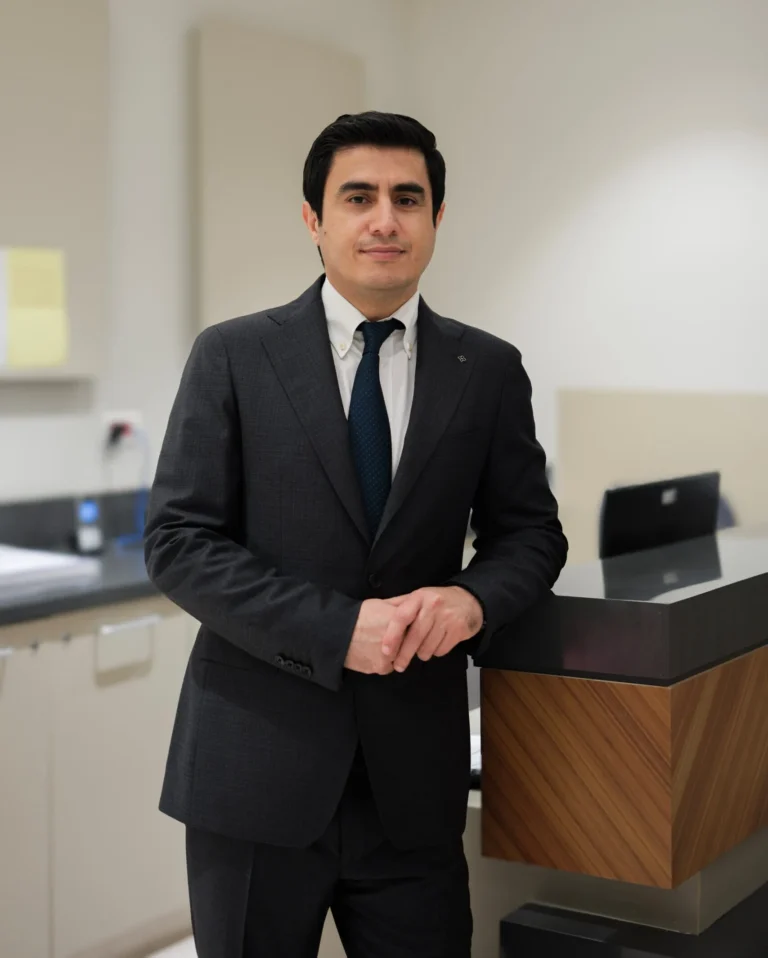
 Medical review board
Assoc. Prof. Dr. Mustafa Çorum
Physical Medicine & Rehabilitation and Neurorehabilitation Specialist As an experienced physician specializing in the management and rehabilitation of acute-onset stroke, brain injury, and neurological conditions, he provides his patients w… View profile →
Trust and transparency
Editorial Board and Medical Review
Who prepares every health article on this website, who reviews it and how it is kept up to date.
A single sentence about rehabilitation or neurological treatment can shape a decision about your care. For that reason no health content on this website is published unless the person who prepared it and the physician who confirmed its medical accuracy are known. This page explains how that process works.
- 18 published content articles and treatment pages
- 2 languages, one process
- 6 review criteria for every text
Board
Board members
The editorial team prepares our health content; the medical review board checks every text for accuracy before it is published. Each profile page lists training, role and verifiable links.
Medical review board
Assoc. Prof. Dr. Mustafa Çorum
Physical Medicine & Rehabilitation and Neurorehabilitation Specialist As an experienced physician specializing in the management and rehabilitation of acute-onset stroke, brain injury, and neurological conditions, he provides his patients w… View profile →
 Editorial team
Yağmur Temel Sucu
Nurse My professional journey in healthcare began during my high school years and continues today in the field of international health tourism. I take an active role in medical… View profile →
Why
Why this page exists
Health information can affect the life of the person reading it. Search engines and AI-assisted search systems also look for the answers to “who wrote it, who approved it and when was it updated” on this kind of content. We do not hide these answers from readers: this page gathers the rules behind the scenes in one place.
Our content makes no promise of a guaranteed outcome and avoids exaggeration. It is written to inform, not to replace an examination, and it follows the rules that apply to the promotion of health services.
Process
How content is prepared
- Step 1: Topic selection We start from the questions patients actually ask.
- Step 2: Research Current literature and clinical practice are reviewed.
- Step 3: Drafting The editorial team writes in plain, understandable language.
- Step 4: Medical review A specialist physician checks medical accuracy line by line.
- Step 5: Publication The text is published only after editorial and medical review approval.
- Step 6: Updates Content is re-reviewed as practice changes.
Criteria
What the medical review looks at
The physician reads the draft prepared by the editorial team before publication and asks for corrections under the headings below. A corrected text is reviewed again; it does not enter the publication plan until it is approved.
- Medical accuracy Do diagnoses, treatment names, indications and contraindications match current knowledge?
- Risks and limits Are the risks of each method and who it is not suitable for stated clearly?
- Time and recovery statements Are figures such as session counts and recovery periods given as realistic ranges?
- Language and certainty Have sentences implying guaranteed results or exaggeration been removed?
- Regulatory compliance Are statements that conflict with health-promotion rules and pushy calls to action absent?
- Sources Are claims supported by peer-reviewed publications or professional guidelines?
Sources
Our sources and the rules we follow
Scientific sources
Peer-reviewed journals (e.g. Stroke, Archives of Physical Medicine and Rehabilitation, Neurorehabilitation and Neural Repair), systematic reviews and current textbooks. We rely on accumulated evidence, not on a single study.
Professional guidelines
Practice principles and patient-information standards of professional societies in physical medicine, rehabilitation and stroke care.
Regulation and ethics
Rules on the promotion of health services, the medical code of ethics and personal-data protection law. These rules also set the limits for our content team.
Policy
Updates and corrections
An article is reviewed again in four cases: when a professional guideline changes, when new and reliable evidence is published, when clinical practice changes and when a reader reports an error. Apart from these, treatment pages and the most-read articles are re-read at regular intervals.
To report an error, send the article’s address and the sentence concerned to info@mustafacorum.com. Corrections are not made silently: the text changes and the “last updated” date is refreshed. Information found to be wrong is taken down until a correction is ready.
FAQ
Frequently asked questions
Who writes the articles on this website?
Articles are prepared by the editorial team, starting from the questions patients actually ask. The people involved are listed on this page with their own profile pages.
What exactly does “medical review” mean?
The specialist physician reads the text line by line before publication, checks medical statements against current knowledge and has them corrected where needed. A review confirms the accuracy of a text; it is not a personal diagnosis or treatment decision.
I found an error in an article. What should I do?
Send us the article’s address and the statement you believe is wrong. The report is assessed by the physician, and the article’s “last updated” date is refreshed when a correction is made.
Do these articles replace a consultation?
No. The articles provide general information; which treatment suits you can only be decided in an examination.
Are the English contents reviewed as well?
Yes. Articles and treatment pages on the Turkish and English sites go through the same process.
The content on this website is for information only and does not replace examination, diagnosis or treatment. Always consult your own physician about your situation.