Stroke is a serious neurological emergency that occurs when blood flow to part of the brain is reduced or interrupted, or when a blood vessel in the brain ruptures and causes bleeding. When brain tissue does not receive enough oxygen and nutrients, brain cells may begin to become damaged within a short period of time, leading to a range of neurological impairments.
The effects of stroke vary from person to person. Depending on the area of the brain affected and the extent of the damage, patients may experience weakness in the arms and legs, walking difficulties, loss of balance, speech and swallowing problems, visual disturbances, cognitive changes, and increased dependence in activities of daily living.
Stroke treatment is not limited to medical interventions performed during the acute phase. Once the patient’s vital condition has stabilized, comprehensive and individualized rehabilitation becomes one of the most important stages of the recovery process.
The main goals of rehabilitation are to support the recovery of lost functions, improve remaining abilities, reduce complications, and help the patient achieve the highest possible level of independence in daily life.
What Is a Stroke?
A stroke is an acute neurological condition caused by disruption of blood circulation to a specific area of the brain.
Brain cells require a continuous supply of oxygen and glucose. When blood flow to brain tissue is interrupted or bleeding occurs within the brain, nerve cells in the affected area may begin to sustain damage.
Depending on the area of the brain involved, movement, speech, vision, balance, swallowing, perception, memory, and other functions may be affected.
Although stroke is more common in older adults, it can occur at any age. If symptoms develop suddenly, emergency medical care should be sought without delay.
What Are the Types of Stroke?
Stroke is generally divided into two main types:
Ischemic Stroke
An ischemic stroke occurs when an artery supplying the brain becomes blocked by a blood clot or another mechanism.
When adequate blood flow cannot reach the affected area of the brain, the supply of oxygen and nutrients decreases and brain cells may become damaged.
One of the main objectives of acute treatment for ischemic stroke is to restore blood flow to the blocked vessel as quickly as possible in appropriately selected patients.
Hemorrhagic Stroke
A hemorrhagic stroke occurs when a blood vessel within or around the brain ruptures and causes bleeding.
Depending on the location and extent of the bleeding, increased pressure within the brain and varying degrees of neurological impairment may develop.
Treatment for hemorrhagic stroke is determined according to the cause, size, and location of the bleeding, as well as the patient’s overall medical condition.
Following acute treatment for either type of stroke, a rehabilitation program may be planned to address any remaining neurological and functional impairments.
What Are the Symptoms of Stroke?
Stroke symptoms usually develop suddenly.
Common symptoms may include:
- Sudden facial drooping or asymmetry,
- Sudden weakness or numbness in an arm or leg,
- Loss of movement, particularly on one side of the body,
- Difficulty speaking,
- Difficulty understanding speech,
- Sudden vision loss or double vision,
- Sudden loss of balance or coordination,
- Difficulty walking,
- Sudden severe headache with no known cause,
- Changes in level of consciousness.
If one or more of these symptoms occur, it is important not to wait for them to resolve on their own. Time is a critical factor in stroke treatment, and the patient should be evaluated at a healthcare center experienced in stroke management as soon as possible.
How Is Stroke Treated?
Stroke treatment is planned according to the type of stroke, time of onset, area of the brain affected, the patient’s overall medical condition, and any accompanying diseases.
Treatment can generally be considered in two main stages:
- Acute stroke treatment
- Post-stroke rehabilitation
During the acute phase, the priority is to limit further brain damage, preserve vital functions, and, where appropriate, treat the underlying cause of the stroke.
For eligible patients with ischemic stroke, clot-dissolving medications or interventional procedures such as mechanical thrombectomy may be considered. In hemorrhagic stroke, treatment may involve controlling the bleeding, managing intracranial pressure, and performing neurosurgical intervention when necessary.
Once the patient becomes medically stable following acute treatment, the rehabilitation process begins.
This stage is particularly important for reducing persistent functional impairments and improving the patient’s level of independence.
Which Functions May Be Affected After a Stroke?
Stroke does not affect only arm or leg movement.
Depending on the area of the brain involved, a wide range of functions may be affected.
Arm and Leg Function
Weakness or severe loss of movement may develop on one side of the body. The patient may have difficulty lifting an arm, using the hand, standing up, or walking.
Balance and Walking
In addition to muscle weakness, impairment of balance, coordination, and sensory systems may affect walking ability.
Patients may develop an asymmetrical gait, foot dragging, shortened steps, balance problems, or an increased risk of falling.
Hand and Upper Limb Function
Following a stroke, movement of the shoulder, elbow, wrist, and fingers may be affected.
Patients may have difficulty reaching for an object, gripping, holding a glass, fastening buttons, or eating independently.
Speech and Language Function
Some patients may experience difficulty producing speech sounds or may develop aphasia, which affects the ability to understand or use language.
Swallowing Function
Coordination of the muscles involved in swallowing may be impaired after stroke. This can make the safe consumption of food and liquids more difficult.
Cognitive Function
Attention, memory, problem-solving, planning, decision-making, and awareness of the surrounding environment may be affected.
Visual and Perceptual Function
Visual field loss, spatial perception difficulties, or problems recognizing one side of the body or environment may occur.
Emotional and Psychological Well-Being
Depression, anxiety, reduced motivation, and emotional changes may occur after stroke.
For this reason, rehabilitation should not focus solely on muscle strength. The patient’s physical, cognitive, communication, and psychosocial needs should be evaluated together.
The Importance of Rehabilitation After Stroke
The primary goal of post-stroke rehabilitation is to help the patient achieve the highest possible level of physical and functional capacity and regain as much independence as possible in daily life.
Stroke can affect movement, communication, cognition, and daily living skills to varying degrees.
The rehabilitation process begins with a detailed assessment of these impairments and the identification of individualized treatment goals.
Rehabilitation goals may include:
- Improving muscle strength,
- Enhancing motor control,
- Maintaining joint range of motion,
- Improving sitting and trunk control,
- Practicing standing and transfer skills,
- Improving balance and coordination,
- Supporting walking function,
- Improving arm and hand function,
- Increasing independence in activities of daily living,
- Supporting speech and communication skills,
- Improving safe swallowing,
- Supporting cognitive skills,
- Supporting return to social life and, where possible, work.
Rehabilitation goals are determined according to the patient’s current functional level and reassessed throughout the treatment process.
When Should Rehabilitation Begin After Stroke?
Stroke rehabilitation may begin during the acute phase, as soon as the patient’s medical condition allows.
However, early rehabilitation does not mean intensive mobilization immediately after a stroke.
During the acute phase, factors such as blood pressure, cardiac and respiratory function, level of consciousness, type of stroke, brain imaging findings, and overall medical condition are evaluated to determine when rehabilitation should begin and at what intensity.
In medically appropriate patients, early interventions may include:
- Positioning in bed,
- Maintaining joint range of motion,
- Respiratory exercises,
- Safe sitting,
- Bed mobility exercises,
- Transfer training,
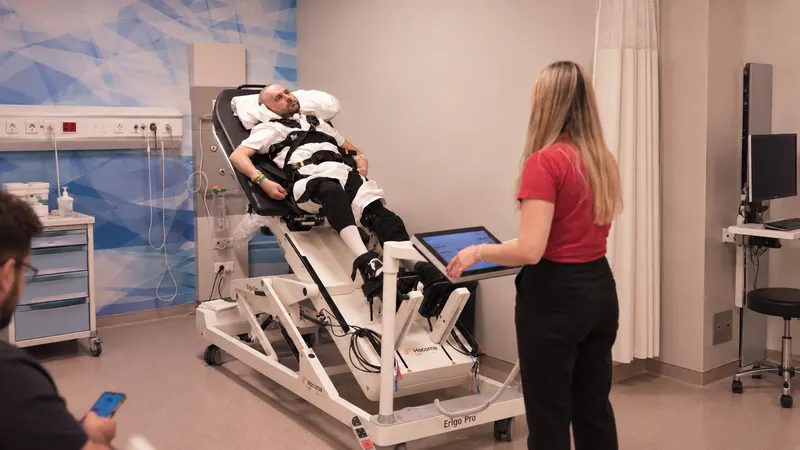
- Gradual mobilization.
As the patient’s condition stabilizes, the intensity of rehabilitation and functional goals may be progressively increased.
The key principle of early rehabilitation is therefore to begin treatment as early as clinically appropriate, at an intensity suited to the patient’s medical condition.
Why Are Early and Intensive Rehabilitation Important?
The brain’s ability to adapt and form new connections plays an important role in recovery after stroke. This ability is known as neuroplasticity.
Through neuroplasticity, the brain may reorganize certain functions after injury and develop new movement strategies.
One of the main reasons repetitive, goal-directed, and active exercises are used in rehabilitation is to support these processes of learning and reorganization.
However, rehabilitation intensity should not be the same for every patient.
Factors such as the patient’s:
- Overall medical condition,
- Severity of the stroke,
- Level of consciousness,
- Fatigue,
- Muscle strength,
- Cardiovascular capacity,
- Ability to actively participate in rehabilitation
should be considered when determining treatment intensity.
As tolerated, exercise duration, number of repetitions, and task difficulty can be gradually increased.
What Is Neuroplasticity?
Neuroplasticity is the brain’s ability to change structurally and functionally in response to experience, learning, or injury.
Following a stroke, movements that were previously performed automatically may become difficult because of damage to brain tissue.
Regular, repetitive, and task-oriented practice during rehabilitation may help the nervous system reorganize movement patterns.
For example, a patient may practice reaching movements hundreds of times in different functional tasks or perform a large number of controlled step repetitions during gait training.
The number of repetitions alone is not enough. The patient’s active participation and the functional purpose of the exercise are also important.
Neuroplasticity is not limited to the period immediately after stroke. Although the rate of recovery may change over time, appropriately selected patients may continue to achieve functional gains with rehabilitation at later stages as well.
How Is Post-Stroke Rehabilitation Planned?
Every stroke patient is different.
Even two patients with strokes affecting similar areas of the brain may have very different levels of functional impairment and rehabilitation needs.
For this reason, a comprehensive assessment is performed before treatment.
The assessment may include:
- Muscle strength,
- Joint range of motion,
- Muscle tone and spasticity,
- Sensory function,
- Sitting and trunk control,
- Ability to stand,
- Balance,
- Walking,
- Arm and hand function,
- Activities of daily living,
- Speech and communication,
- Swallowing,
- Cognitive function,
- Psychological status,
- Previous lifestyle and personal goals.
Based on these findings, short-, medium-, and long-term rehabilitation goals are established.
Multidisciplinary Stroke Rehabilitation
Because stroke can affect many aspects of the body and daily life, rehabilitation often requires collaboration among different healthcare disciplines.
Depending on the patient’s needs, the rehabilitation team may include:
- A Physical Medicine and Rehabilitation physician,
- A neurologist and other relevant medical specialists when needed,
- Physiotherapists,
- Occupational therapists,
- Speech and language therapists,
- Nurses,
- Psychologists,
- Dietitians.
A multidisciplinary approach ensures that rehabilitation addresses not only a single issue such as walking or muscle strength, but the patient’s overall functional needs.
Gait Rehabilitation After Stroke
Regaining the ability to walk is one of the most important rehabilitation goals for many stroke patients.
At the beginning of treatment, a patient may be unable to stand independently or may require support from more than one person while walking.
Depending on the patient’s functional level, gait rehabilitation may progress through:
- Bed mobility,
- Sitting balance,
- Standing,
- Weight shifting,
- Balance training,
- Parallel bar exercises,
- Assisted walking,
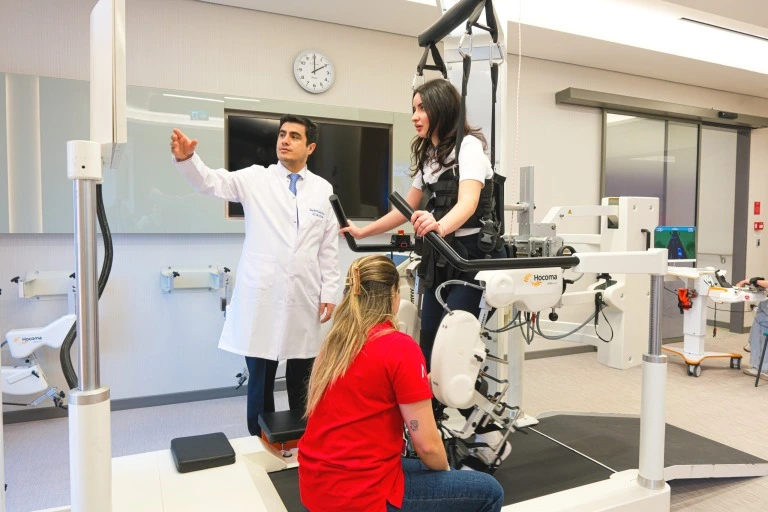
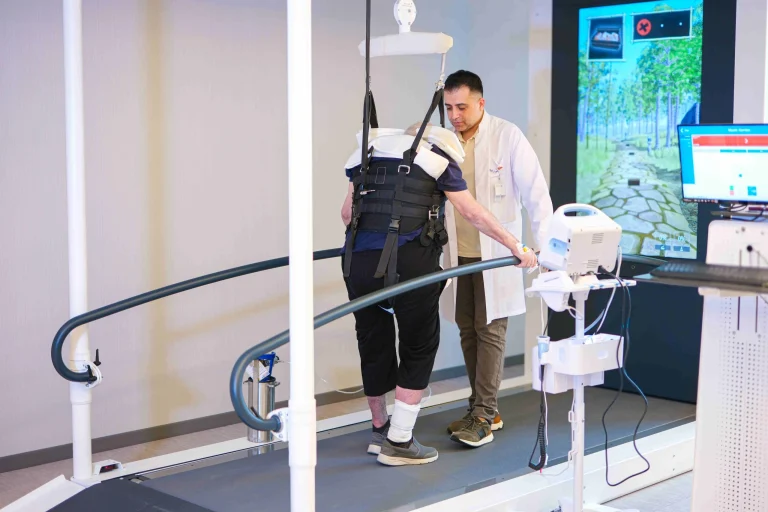
- Robot-assisted gait training,
- Treadmill training,
- Obstacle negotiation and functional walking practice.
The goal is not simply for the patient to walk a certain distance, but to develop safer, more balanced, controlled, and functional walking ability.
Arm and Hand Rehabilitation After Stroke
Recovery of arm and hand function may take longer than recovery of walking ability in some patients.
Patients may experience:
- Limited shoulder movement,
- Difficulty controlling the elbow,
- Loss of wrist and finger movement,
- Difficulty gripping,
- Difficulty opening the hand,
- Difficulty holding and releasing objects.
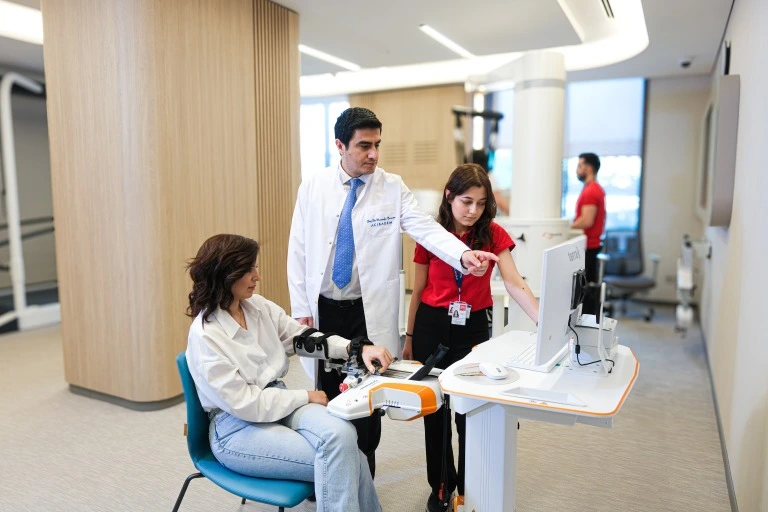
Upper limb rehabilitation may include active and active-assisted exercises, task-oriented training, activities of daily living, occupational therapy, and technology-assisted rehabilitation methods when appropriate.
The goal is not only to restore movement in the arm and hand, but also to help the patient use the upper limb as functionally as possible in daily life.
How Is Robotic Rehabilitation Used in Stroke Treatment?
Robotic rehabilitation technologies may be used to complement conventional rehabilitation methods after stroke.
Depending on the patient’s functional level, treatment may include:
- Early mobilization systems,
- Robot-assisted gait training systems,
- Gait and balance technologies,
- Upper limb rehabilitation systems,
- Hand and finger rehabilitation devices.
One of the main advantages of robotic systems is their ability to support a high number of controlled and repeatable movements.
Some systems can also measure patient performance, provide objective data, and help the rehabilitation program be adjusted according to progress.
Robotic rehabilitation does not replace comprehensive stroke rehabilitation. It should be considered one component of an individualized and multidisciplinary rehabilitation program.
Spasticity Treatment After Stroke
Some patients may develop increased muscle tone after stroke. This condition is known as spasticity.
Spasticity may cause:
- The arm to pull toward the body,
- Persistent elbow flexion,
- The hand to remain clenched,
- Stiffness in the leg,
- The foot to turn inward or downward,
- Difficulty walking.
Spasticity treatment is planned according to the patient’s functional needs.
Treatment options may include physiotherapy, stretching and positioning, orthoses, medications, and botulinum toxin injections in appropriately selected patients.
The goal is not simply to reduce muscle tone, but to improve movement, daily function, hygiene, and patient comfort.
Regaining Activities of Daily Living After Stroke
The success of rehabilitation is not measured solely by improvements in muscle strength.
It is important that patients are able to use the functions they regain in daily life.
For this reason, rehabilitation may include practice of:
- Turning in bed,
- Getting out of bed,
- Transferring to a chair,
- Using the toilet,
- Dressing,
- Eating,
- Personal care,
- Moving safely around the home,
- Using stairs.
The goal is to reduce dependence on others as much as possible and support more active participation in daily life.
How Long Does Stroke Rehabilitation Take?
There is no single standard duration of rehabilitation that applies to every stroke patient.
The duration of rehabilitation may vary according to:
- Severity of the stroke,
- Location and extent of brain injury,
- Age and overall health,
- Initial functional level,
- Accompanying medical conditions,
- Intensity of the rehabilitation program,
- Participation in treatment,
- Development of complications.
While significant functional improvements may occur during the first weeks and months for some patients, rehabilitation needs may continue for a much longer period.
For this reason, rehabilitation should not automatically end after a predetermined period. Progress should be reassessed regularly and new functional goals may be established accordingly.
Is Recovery Possible After a Stroke?
The degree of recovery after stroke varies from patient to patient.
The size and location of the brain injury, initial neurological status, age, accompanying medical conditions, and ability to actively participate in rehabilitation can all influence recovery.
Some patients may regain a substantial proportion of their previous functions, while others may continue to experience a degree of permanent functional impairment.
For this reason, realistic and individualized rehabilitation goals are important.
The purpose of treatment is not to promise the same outcome for every patient, but to assess each patient’s current abilities and support them in achieving the highest possible level of functional independence.
The Main Goal of Stroke Rehabilitation
The primary goal of stroke rehabilitation is not simply to help a patient walk again.
Rehabilitation is a comprehensive process that addresses movement, balance, arm and hand function, speech, swallowing, cognition, and activities of daily living together.
Through an individualized rehabilitation program, the goals may include:
- Supporting recovery of lost functions,
- Improving existing abilities,
- Reducing secondary complications,
- Increasing independence in daily life,
- Supporting reintegration into family life, social activities, and, where possible, employment.
Post-stroke rehabilitation is a dynamic, multidisciplinary, and individualized treatment process that requires the patient’s needs and goals to be reassessed over time.
Frequently Asked Questions About Stroke Treatment and Rehabilitation
When should rehabilitation begin after a stroke?
Rehabilitation may begin during the acute phase as soon as the patient’s medical condition allows. However, the timing and intensity of rehabilitation should be determined according to the patient’s clinical condition. Intensive mobilization within the first 24 hours is not appropriate for every patient.
Is complete recovery possible after a stroke?
The degree of recovery varies from person to person. The location and extent of the stroke, initial functional impairment, overall health, and rehabilitation process may all influence the outcome. Each patient therefore requires an individualized assessment.
How long does it take to walk again after a stroke?
There is no standard timeframe. Some patients may begin walking with assistance at an early stage, while gait rehabilitation may take considerably longer in patients with more severe impairments.
Can robotic rehabilitation be used after a stroke?
Yes. When clinically and functionally appropriate, robot-assisted gait training, upper limb rehabilitation, and hand rehabilitation systems may be incorporated into a comprehensive rehabilitation program.
Can arm and hand movement return after a stroke?
Different degrees of recovery in upper limb function are possible. Outcomes vary according to the severity of impairment. Intensive, repetitive, and functional exercises are an important part of upper limb rehabilitation.
How long should physiotherapy continue after a stroke?
The duration of treatment is determined individually. Functional gains, rehabilitation goals, and ongoing treatment needs are reassessed regularly to determine whether and how the program should continue.
Is physiotherapy alone sufficient for stroke rehabilitation?
Not always. Stroke may affect not only walking but also hand function, speech, swallowing, cognition, and psychological well-being. When needed, a multidisciplinary rehabilitation approach involving several healthcare disciplines is used.