An early, intensive, and comprehensive neurorehabilitation approach for patients with severe neurological impairments during the acute and subacute stages.
Initiating rehabilitation as early as possible after stroke or brain injury is important for safe mobilization, prevention of complications, and support of the functional recovery process.
During the acute and subacute stages, our treatment approach is based on the combined assessment of the patient’s medical condition and rehabilitation needs, close physician monitoring, and intensive, personalized therapy programs.
Early Neurorehabilitation
For patients with severe neurological impairments during the acute and subacute stages, our primary goals are to achieve safe mobilization as early as possible, prevent complications, and initiate functional recovery.
During this process, patients may participate in intensive, one-to-one rehabilitation programs including physiotherapy, occupational therapy, and speech and swallowing therapy. Close medical monitoring is provided by Neurology, Neurosurgery, and other relevant medical specialties as needed.
Any changes in the patient’s clinical condition can be assessed promptly, and intensive care support can be provided when necessary. This allows rehabilitation and medical management to be carried out simultaneously for patients with severe neurological impairments.
Who May Be Eligible for an Acute Neurorehabilitation Program?
The patient’s overall medical condition and suitability for rehabilitation are assessed by a multidisciplinary team before an individualized treatment program is developed.
Acute and early-stage neurorehabilitation may be particularly appropriate for patients who:
- Require close monitoring following intensive care,
- Have an impaired level of consciousness,
- Have developed severe motor impairment,
- Have a tracheostomy or PEG tube,
- Are at high risk of medical complications,
- Have developed severe neurological impairment following stroke or traumatic brain injury.
Patients with severe impairment and a minimally conscious state may also be considered for this comprehensive rehabilitation approach following careful evaluation of their clinical condition.
Comprehensive and Holistic Treatment Approach
Every patient has a different degree of neurological impairment, clinical condition, and functional capacity. Therefore, each treatment plan is individualized according to the patient’s current clinical status, the type of neurological injury, and the highest achievable functional goals.
Early Rehabilitation
In neurological conditions such as stroke and brain injury, rehabilitation is initiated at the earliest clinically appropriate stage.
Medical Care and Neurorehabilitation
For patients with additional medical needs such as respiratory support, a tracheostomy, or a feeding tube, rehabilitation can be continued alongside the required medical care.
Intensive and Comprehensive Therapy
Depending on the patient’s individual needs, the treatment program may include:
- Robotic rehabilitation,
- Physiotherapy,
- Occupational therapy,
- Speech and swallowing therapy,
- Cognitive rehabilitation.
Multidisciplinary Team
Physical Medicine and Rehabilitation specialists with expertise in neurorehabilitation, physicians from relevant medical specialties, rehabilitation nurses, and therapists work together throughout the patient’s treatment process.
Close Medical Monitoring and Multidisciplinary Support
For patients in the acute and subacute stages, close monitoring of the overall medical condition is just as important as rehabilitation itself.
Depending on the patient’s needs, care may include:
- Daily physician follow-up by a Physical Medicine and Neurorehabilitation Specialist,
- Consultations with relevant specialties such as Neurology, Neurosurgery, Cardiology, Infectious Diseases, and Internal Medicine,
- Weekly Liaison Psychiatry (Neuropsychiatry) assessment,
- Nursing care experienced in pressure injury prevention and management, PEG care, and tracheostomy care,
- Nutrition and dietetic counseling,
- Continuous dedicated nursing support when required.
Specialized Interventions for Early-Stage Rehabilitation
Specialized assessments and interventions for problems such as swallowing difficulties, respiratory issues, nutritional needs, and spasticity may be incorporated into the rehabilitation program for patients with severe neurological impairments.
These may include:
- Bedside Fiberoptic Endoscopic Evaluation of Swallowing (FEES),
- PEG care and swallowing therapy,
- Tracheostomy care and the decannulation process,
- Respiratory rehabilitation,
- Botulinum toxin injections for spasticity management.
Robotic Neurorehabilitation
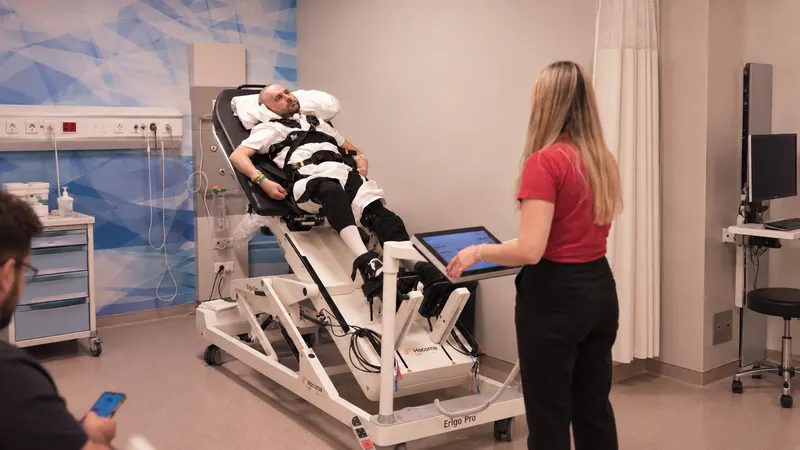
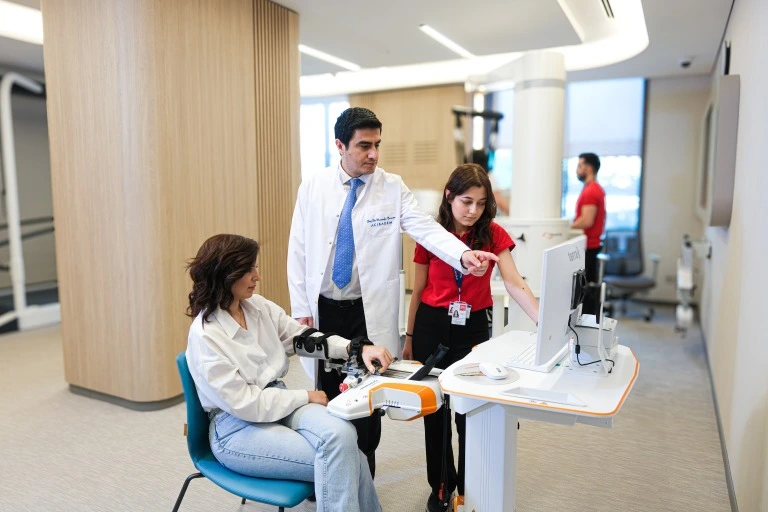
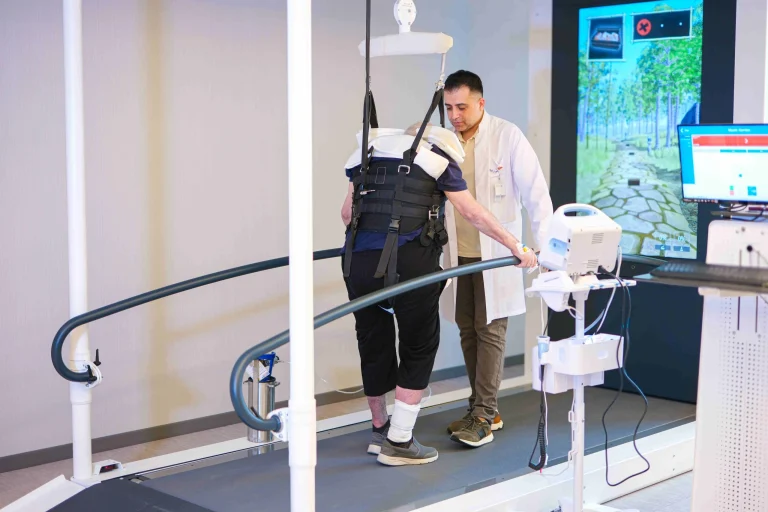
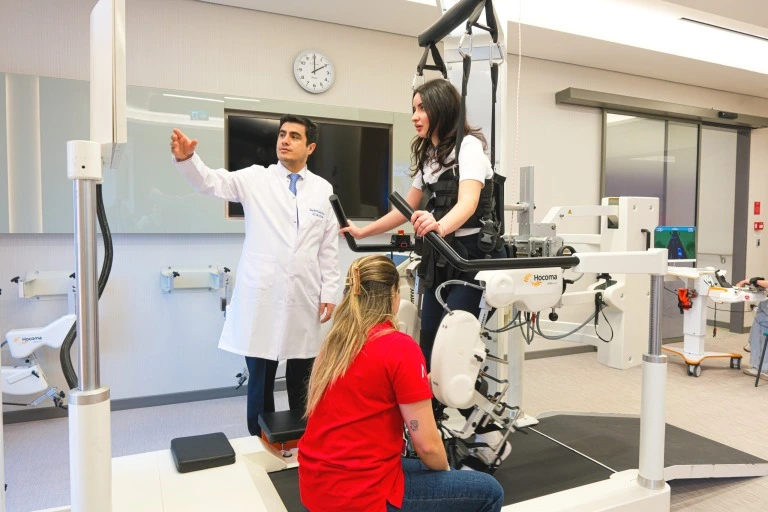
In patients with stroke, traumatic brain injury, neurological impairments following neurosurgery, and spinal cord injuries, high-intensity robot-assisted rehabilitation designed to promote neuroplasticity can form an important part of a comprehensive neurorehabilitation program.
Robotic rehabilitation programs are planned according to each patient’s individual functional goals.
Robotic systems can support:
- Safe mobilization during the early stages of rehabilitation,
- High-repetition and prolonged movement training,
- Accurate and consistent repetition of movement patterns,
- Greater patient participation and motivation during therapy.
Through this approach, the goal is to maximize functional recovery potential even in patients with severe neurological impairments.
From Safe Mobilization to Functional Recovery
Rehabilitation during the acute stage involves much more than movement exercises alone. It is a holistic treatment approach in which the patient’s medical condition is closely monitored, different medical specialties work together, and rehabilitation interventions are planned according to individualized functional goals.
An inpatient rehabilitation model delivered within a hospital setting makes it possible to combine intensive care support when needed, multidisciplinary physician monitoring, advanced robotic rehabilitation technologies, and intensive personalized therapy programs within a coordinated treatment process.
Our goal is to begin rehabilitation at the earliest stage appropriate for the patient’s clinical condition and to support functional recovery through a safe, controlled, and comprehensive treatment process.