Traumatic brain injury (TBI) is a serious neurological condition that occurs when the structure or function of the brain is affected by a blow to the head, a fall, a traffic accident, or another external force.
Depending on the severity of the injury and the areas of the brain affected, patients may experience varying degrees of difficulty with movement, balance, walking, arm and hand function, speech, swallowing, attention, memory, behavior, emotional well-being, and activities of daily living.
The effects of traumatic brain injury are different for every patient. Some patients may experience mild and temporary functional impairments, while severe brain injury may result in impaired consciousness, significant motor loss, communication difficulties, and a high level of dependence in daily life.
For this reason, traumatic brain injury treatment is not limited to medical interventions performed during the acute phase. Once the patient’s vital condition has stabilized, a comprehensive, multidisciplinary, and individualized neurorehabilitation program becomes an important part of treatment.
The primary goal of rehabilitation is to support the recovery of lost or impaired functions, reduce complications, and help the patient achieve the highest possible level of independence in daily life.
What Is Traumatic Brain Injury?
Traumatic brain injury occurs when the brain is affected by an external physical force.
Traffic accidents, falls from height, sports injuries, occupational accidents, and severe blows to the head can all cause traumatic brain injury.
The injury may not be limited to the changes that occur at the moment of impact. In the period following the initial trauma, cerebral edema, bleeding, changes in intracranial pressure, and other secondary processes may also affect the patient’s neurological condition.
Traumatic brain injury is generally classified as mild, moderate, or severe. However, this classification alone is not sufficient to determine rehabilitation needs.
The patient’s:
- Level of consciousness,
- Mobility,
- Muscle strength,
- Balance and coordination,
- Speech and communication skills,
- Swallowing function,
- Cognitive status,
- Behavioral and emotional changes,
- Independence in activities of daily living
should be evaluated together.
What Problems Can Occur After Traumatic Brain Injury?
Because traumatic brain injury can affect different areas of the brain, the resulting problems may vary considerably.
Movement and Muscle Control Problems
Patients may develop muscle weakness on one or both sides of the body.
They may have difficulty performing basic movements such as turning in bed, sitting, standing up, or walking.
Some patients may have very limited voluntary movement, while others may retain muscle strength but experience impaired coordination.
Balance and Walking Disorders
After brain injury, impairment in balance, coordination, motor control, and sensory systems may lead to difficulties with walking.
Patients may have difficulty:
- Standing up,
- Maintaining balance,
- Shifting weight from one leg to the other,
- Controlling their steps,
- Changing direction,
- Avoiding obstacles.
Loss of Arm and Hand Function
Traumatic brain injury may affect movements of the shoulder, elbow, wrist, and fingers.
Activities such as reaching, grasping, releasing objects, eating, dressing, and personal care may become more difficult.
Speech and Communication Problems
Depending on the areas of the brain affected, patients may experience difficulties with speech, language comprehension, self-expression, or maintaining communication.
Swallowing Problems
In some patients, coordination of the oral and throat muscles may be impaired, resulting in swallowing difficulty (dysphagia).
In such cases, it is important to assess whether the patient can eat and drink safely and to evaluate the risk of aspiration.
Changes in Cognitive Function
After traumatic brain injury, patients may experience changes in:
- Attention,
- Memory,
- Learning,
- Information processing speed,
- Problem-solving,
- Planning,
- Decision-making,
- Awareness of time and place.
Behavioral and Emotional Changes
Some patients may experience personality or behavioral changes, impulsivity, agitation, loss of motivation, depressive symptoms, or anxiety.
These changes may affect both daily life and participation in rehabilitation.
When Should Rehabilitation Begin After Traumatic Brain Injury?
The goal is to begin rehabilitation as early as possible once the patient is medically stable and clinically appropriate.
However, early rehabilitation does not mean immediately mobilizing every patient intensively or starting high-intensity exercise.
Particularly in severe traumatic brain injury, the timing and intensity of rehabilitation should be determined according to factors such as:
- Level of consciousness,
- Respiratory status,
- Blood pressure,
- Intracranial pressure-related concerns,
- Associated fractures or injuries,
- Infection status,
- Cardiovascular stability.
During the early phase, rehabilitation may begin with positioning, maintaining joint range of motion, respiratory support, prevention of contractures, and controlled mobilization.
As the patient’s clinical condition improves, the rehabilitation program can progress toward more active and functional exercises.
The Importance of Early Rehabilitation
Prolonged immobility can negatively affect not only the muscles and joints but also circulation, respiratory function, and overall functional capacity.
For this reason, early rehabilitation planning is important in medically appropriate patients.
Early rehabilitation may aim to:
- Preserve joint range of motion,
- Help reduce muscle loss associated with prolonged immobility,
- Reduce the risk of contractures,
- Ensure appropriate positioning,
- Improve tolerance to sitting and upright positioning,
- Increase sensorimotor stimulation,
- Prepare the patient for more advanced stages of rehabilitation.
Treatment intensity is gradually increased according to the patient’s medical condition and response to rehabilitation.
Neuroplasticity and Traumatic Brain Injury Rehabilitation
The brain’s ability to reorganize its functions in response to experience, learning, and injury is known as neuroplasticity.
Following traumatic brain injury, intensive, repetitive, and goal-directed rehabilitation exercises are designed to support these learning and reorganization mechanisms.
For example, patients may repeatedly practice:
- Standing up,
- Reaching for an object,
- Walking movements,
- Opening and closing the hand,
- Specific cognitive tasks.
However, the number of repetitions alone is not the only important factor in neurorehabilitation. Exercises should also be related to the patient’s functional goals, and active patient participation should be encouraged whenever possible.
Goals of Rehabilitation After Brain Injury
The primary goal of rehabilitation after traumatic brain injury is to support the recovery of lost or impaired functions, improve existing abilities, and help the patient achieve the highest possible level of independence in daily life.
Rehabilitation is not limited to physical function. Cognitive processes, communication, swallowing, behavior, emotional well-being, and adaptation to daily life are also evaluated together.
Main rehabilitation goals may include:
- Increasing independence in activities of daily living,
- Improving mobility,
- Supporting muscle strength,
- Improving sitting and trunk control,
- Practicing standing and transfer skills,
- Improving balance and coordination,
- Supporting walking function,
- Improving arm and hand use,
- Managing spasticity and muscle tone problems,
- Supporting speech and communication,
- Assessing and improving swallowing function,
- Training cognitive skills such as attention and memory,
- Managing behavioral and emotional problems,
- Supporting reintegration into family and social life.
How Is an Individualized Rehabilitation Program Planned?
Every patient with traumatic brain injury has a different degree of impairment and a different recovery process.
For this reason, rather than applying a standard rehabilitation protocol, an individualized treatment plan is developed.
Before treatment, the patient may be assessed in terms of:
- Level of consciousness and awareness,
- Muscle strength,
- Joint range of motion,
- Muscle tone,
- Sensory function,
- Trunk control,
- Balance,
- Walking ability,
- Arm and hand function,
- Activities of daily living,
- Speech and communication skills,
- Swallowing function,
- Attention and memory,
- Behavioral and emotional status.
Based on these assessments, individualized short-, medium-, and long-term rehabilitation goals are established.
The patient’s progress is reviewed at regular intervals and the treatment program is updated accordingly.
Rehabilitation for Patients with Disorders of Consciousness
Following severe traumatic brain injury, some patients may experience significant impairment of consciousness.
Patients may present at different levels of consciousness, including coma, unresponsive wakefulness, or a minimally conscious state.
At this stage, the goal of rehabilitation is not simply to have the patient perform active exercises.
Treatment may include:
- Appropriate positioning,
- Maintaining joint range of motion,
- Respiratory and secretion management,
- Prevention of contractures,
- Sensorimotor stimulation,
- Gradual mobilization,
- Improving tolerance to sitting and upright positioning.
The patient’s level of consciousness and behavioral responses are assessed regularly.
As the clinical condition improves, rehabilitation can progress toward more active and task-oriented interventions.
Gait Rehabilitation After Traumatic Brain Injury
Regaining walking ability is one of the main rehabilitation goals for many patients with traumatic brain injury.
However, gait rehabilitation may not begin directly with walking.
In severely affected patients, the process may progress step by step:
bed mobility → sitting → trunk control → transfers → standing → balance → assisted walking → functional walking
Gait rehabilitation may include:
- Muscle strengthening,
- Trunk control exercises,
- Weight shifting,
- Balance and coordination training,
- Standing practice,
- Treadmill training,
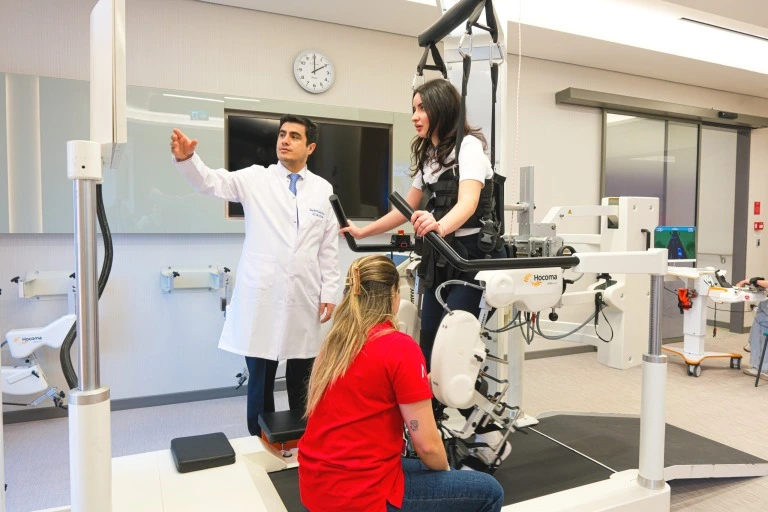
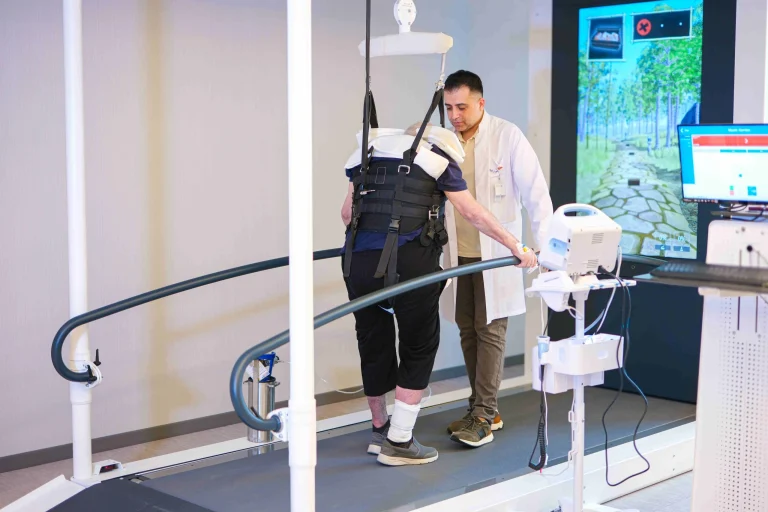
- Robot-assisted gait training,
- Obstacle negotiation,
- Direction changes,
- Walking on different surfaces.
The goal is not simply to help the patient take steps, but to support the development of safe, controlled, and functional walking ability.
Arm and Hand Rehabilitation After Traumatic Brain Injury
Upper limb function may also be affected to varying degrees after brain injury.
Patients may have difficulty lifting the arm, controlling the elbow, opening the hand, or grasping objects.
Arm and hand rehabilitation may include:
- Joint range of motion exercises,
- Active and active-assisted exercises,
- Muscle strengthening,
- Reaching and grasping exercises,
- Fine motor training,
- Functional electrical stimulation,
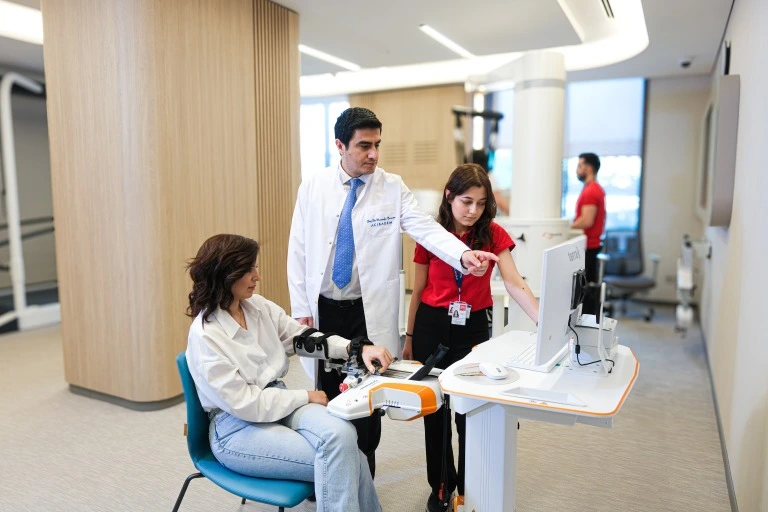
- Technology-assisted upper limb rehabilitation,
- Occupational therapy focused on activities of daily living.
The goal is not only to increase arm movement, but also to help the patient use the upper limb as functionally as possible in daily life.
Cognitive Rehabilitation
Cognitive problems following traumatic brain injury may affect independence just as much as physical impairments.
Patients may have difficulty with:
- Sustaining attention,
- Learning new information,
- Remembering events,
- Planning,
- Problem-solving,
- Initiating and completing tasks,
- Managing more than one task at a time.
A cognitive rehabilitation program is planned according to the specific cognitive areas affected.
In addition to structured exercises, it is important to incorporate tasks that reflect real-life situations.
For example, patients may practice following a daily schedule, completing a task in the correct sequence, or solving problems encountered in everyday life.
When necessary, compensatory strategies such as planners, phone reminders, visual cues, and written schedules may be used.
Speech and Communication Rehabilitation
Communication may be affected in different ways after traumatic brain injury.
Some patients may have difficulty finding words or expressing their thoughts, while others may develop reduced speech intelligibility because of impaired control of the muscles involved in speech.
Problems with attention, memory, and social cognition may also affect the ability to maintain conversations and participate in social communication.
Speech and language therapy may focus on:
- Speech intelligibility,
- Language use,
- Comprehension,
- Verbal expression,
- Cognitive communication,
- Social communication.
Swallowing Rehabilitation
Swallowing impairment after traumatic brain injury may create significant nutritional and respiratory risks.
In patients with swallowing difficulties, assessment may include:
- Safety of oral feeding,
- Food and liquid consistencies,
- Control of the tongue and oral muscles,
- Different phases of swallowing.
When required, swallowing rehabilitation may be provided by a speech and language therapist.
A multidisciplinary approach involving the physician, nurse, dietitian, and swallowing therapy team may be necessary to support safe nutrition.
Spasticity Treatment
Some patients may develop increased muscle tone and spasticity following traumatic brain injury.
Spasticity may cause:
- The arm to remain flexed,
- Difficulty opening the hand,
- Stiffness in the legs,
- Difficulty standing and walking,
- Restricted joint movement,
- Difficulty with daily care.
Depending on the patient’s needs, spasticity treatment may include:
- Positioning,
- Stretching exercises,
- Active movement exercises,
- Orthoses,
- Medications,
- Botulinum toxin injections in appropriately selected patients.
The goal is not simply to reduce muscle tone, but to improve movement, care, hygiene, comfort, and functional capacity.
How Is Robotic Rehabilitation Used in Traumatic Brain Injury?
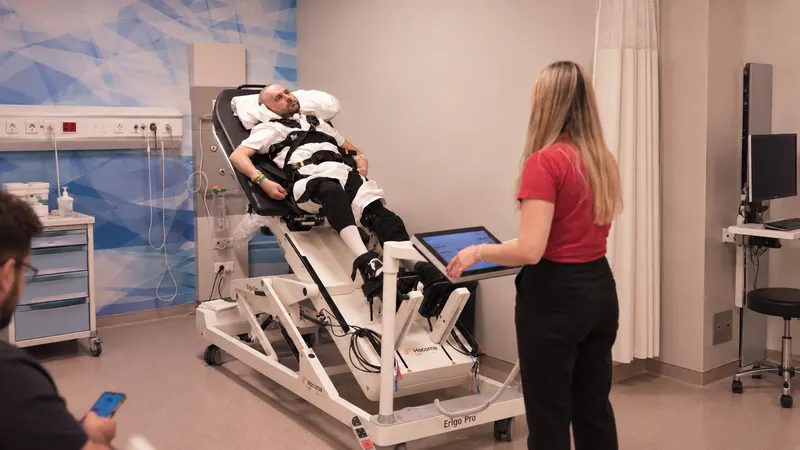
In appropriately selected patients, robotic and technology-assisted rehabilitation systems may be incorporated into a comprehensive neurorehabilitation program.
Depending on the patient’s functional level, technologies may include:
- Early-stage verticalization and mobilization systems,
- Robot-assisted gait training systems,
- Gait and balance rehabilitation technologies,
- Upper limb rehabilitation systems,
- Hand and finger rehabilitation devices,
- Functional electrical stimulation.
One of the main advantages of robotic systems is that they support intensive, controlled, and highly repetitive movement training.
Some systems may also provide objective performance data, which can help clinicians reassess progress and adjust the treatment program over time.
Robotic rehabilitation does not replace conventional rehabilitation. It is used as one component of a comprehensive and individualized treatment program.
Regaining Activities of Daily Living
One of the main goals of traumatic brain injury rehabilitation is to help the patient become as independent as possible in everyday life.
For this reason, rehabilitation is not limited to exercises performed in a therapy gym.
Treatment may include practice of:
- Turning and repositioning in bed,
- Transferring from bed to chair,
- Using the toilet,
- Dressing,
- Eating,
- Personal care,
- Moving safely around the home,
- Using a phone and other everyday tools,
- Moving safely within the community.
Occupational therapy can play an important role in transferring the patient’s physical and cognitive gains into real-life activities.
Behavioral and Psychological Support
Brain injury may lead not only to physical and cognitive changes, but also to behavioral and emotional difficulties.
Patients may experience:
- Emotional fluctuations,
- Irritability,
- Impulsivity,
- Reduced motivation,
- Anxiety,
- Depressive symptoms,
- Changes in social behavior.
These problems may affect both participation in rehabilitation and family relationships.
When necessary, psychological and neuropsychological assessment and support may be incorporated into the rehabilitation program.
The Role of the Family in Rehabilitation
Traumatic brain injury can affect not only the patient but also family members and caregivers.
Particularly in severe brain injury, a prolonged rehabilitation process and the need for assistance with daily activities can create significant responsibilities for the family.
For this reason, family education may include:
- The patient’s current condition,
- Rehabilitation goals,
- Safe transfer techniques,
- Positioning,
- Support with activities of daily living,
- Managing behavioral changes,
- Adapting the home environment.
Helping the family understand the rehabilitation goals and become appropriately involved in the process can also support better organization of the patient’s life after discharge.
Individualized and Multidisciplinary Approach
Every patient with traumatic brain injury has a different degree of impairment, different functional losses, and a different recovery process.
For this reason, treatment should be planned according to the patient’s current needs rather than a standard protocol.
Depending on the patient’s condition, the rehabilitation team may include:
- A Physical Medicine and Rehabilitation physician,
- A neurologist and other relevant specialists when needed,
- Physiotherapists,
- Occupational therapists,
- Speech and language therapists,
- Psychologists or neuropsychologists,
- Rehabilitation nurses,
- Dietitians.
A multidisciplinary approach makes it possible to address not only movement-related impairments, but also cognitive, communication, behavioral, psychological, and daily living needs.
How Long Does Traumatic Brain Injury Rehabilitation Take?
The duration of traumatic brain injury rehabilitation varies from patient to patient.
Factors that may influence the duration of treatment include:
- Severity of the injury,
- Areas of the brain affected,
- Initial level of consciousness,
- Degree of motor and cognitive impairment,
- Associated injuries,
- Age and overall health,
- Complications,
- Active participation in rehabilitation,
- Progress achieved during treatment.
In some patients, rehabilitation may progress over several weeks, while severe brain injury may require rehabilitation for months or longer.
For this reason, the duration of treatment is not fixed in advance. The patient’s progress is assessed regularly and rehabilitation goals are updated accordingly.
Is Recovery Possible After Traumatic Brain Injury?
The degree of recovery after traumatic brain injury varies from patient to patient.
Some patients may achieve significant functional improvements, while severe and widespread brain injury may result in persistent impairments.
Recovery potential may be influenced by factors such as:
- Location and severity of the injury,
- Initial neurological condition,
- Age,
- Overall health,
- Associated injuries,
- Rehabilitation process.
For this reason, rather than promising the same outcome for every patient, rehabilitation should focus on realistic, measurable, and individualized goals.
The primary objective is to help the patient make the best possible use of their current potential and achieve the highest attainable level of functional independence.
The Main Goal of Traumatic Brain Injury Rehabilitation
Traumatic brain injury rehabilitation is not limited to helping the patient walk again or increase muscle strength.
It is a comprehensive neurorehabilitation process that addresses movement, balance, arm and hand function, speech, swallowing, cognitive skills, behavior, psychological well-being, and activities of daily living.
Throughout treatment, the patient’s progress is assessed regularly and the rehabilitation program is updated according to changing needs.
The goals are to support recovery of lost functions, improve existing abilities, reduce secondary complications, and support the patient’s return to family life, social participation, education, or employment whenever possible.
Frequently Asked Questions About Traumatic Brain Injury
Can traumatic brain injury heal completely?
The degree of recovery depends on the severity of the injury, the areas of the brain affected, the patient’s initial neurological condition, and many individual factors. Some patients may experience significant functional improvement, while others may continue to have persistent difficulties.
When should rehabilitation begin?
Rehabilitation assessment should begin as early as possible once the patient’s medical condition allows. The timing and intensity of treatment are determined according to clinical stability.
Is it possible to walk again after traumatic brain injury?
Walking potential varies from patient to patient. The severity of the injury, motor control, balance, cognitive status, and associated injuries may all affect the outcome. Intensive and individualized gait rehabilitation may be used in appropriate patients.
Can robotic rehabilitation be used after traumatic brain injury?
Yes. When the patient’s clinical condition and functional capacity are appropriate, robot-assisted gait training, early mobilization, upper limb rehabilitation, and hand rehabilitation systems may be incorporated into the treatment program.
Can memory problems improve after brain injury?
Different degrees of improvement in cognitive function may occur. The type and severity of memory impairment are assessed, and cognitive rehabilitation may be combined with compensatory strategies such as reminders and organizational tools when needed.
Can speech and swallowing therapy be provided after traumatic brain injury?
Yes. For patients with impaired speech, communication, or swallowing, speech and language therapy and swallowing rehabilitation may be included as part of the comprehensive treatment program.
How long does traumatic brain injury rehabilitation take?
There is no standard duration. Rehabilitation needs are determined according to the severity of impairment, treatment goals, and functional progress achieved over time.