What Is a Stroke?
Stroke is a serious neurological emergency that occurs when blood flow to part of the brain is suddenly interrupted or when a blood vessel in the brain ruptures and causes bleeding. When brain cells are deprived of the oxygen and nutrients they need, they can begin to sustain damage within a short period of time. For this reason, stroke requires urgent medical evaluation and treatment.
Stroke is one of the leading causes of death and long-term disability worldwide. Although it can occur at any age, the risk increases with advancing age. Depending on the area of the brain affected, stroke may cause weakness in the arms or legs, facial weakness, speech and language difficulties, loss of balance, difficulty walking, visual problems, and cognitive impairment.
The effects of stroke vary considerably from patient to patient. Some people may experience relatively mild movement limitations, while others may develop significant functional impairments that affect independence in daily life.
For this reason, early recognition, rapid medical treatment, and timely rehabilitation are important components of stroke care.
Modern rehabilitation approaches can help many patients improve mobility, function, and independence after stroke. Robotic rehabilitation may also be incorporated into comprehensive treatment programs to provide intensive, controlled, and repetitive movement training.
Stroke rehabilitation programs are planned individually according to the patient’s clinical condition, functional capacity, and rehabilitation goals.
What Are the Types of Stroke?
Stroke occurs when blood circulation to part of the brain is disrupted. However, not all strokes develop in the same way.
The two main types of stroke are:
- Ischemic stroke
- Hemorrhagic stroke
A Transient Ischemic Attack (TIA) causes temporary stroke-like symptoms and is an important warning sign for future stroke, although it is not classified as a completed stroke.
Correctly identifying the underlying type is essential for appropriate acute treatment and subsequent rehabilitation planning.
Ischemic Stroke
Ischemic stroke is the most common type of stroke and occurs when a blood vessel supplying the brain becomes blocked, usually by a blood clot.
When blood flow is reduced or completely interrupted, brain cells receive insufficient oxygen and nutrients and may begin to sustain damage.
Common symptoms may include:
- Weakness in an arm or leg,
- Facial drooping,
- Speech or language difficulties,
- Loss of balance,
- Difficulty walking,
- Visual disturbances.
Rapid medical evaluation is particularly important because some patients may be eligible for treatments designed to restore blood flow to the affected area of the brain.
Hemorrhagic Stroke
Hemorrhagic stroke occurs when a blood vessel in or around the brain ruptures and causes bleeding.
The bleeding itself may damage brain tissue and may also increase pressure within the skull.
Hemorrhagic stroke may be associated with conditions such as:
- High blood pressure,
- Cerebral aneurysms,
- Vascular malformations,
- Other disorders affecting blood vessels.
Symptoms may appear suddenly and can include severe headache, changes in consciousness, speech difficulties, weakness, or other neurological impairments.
Transient Ischemic Attack (TIA)
A Transient Ischemic Attack (TIA) is caused by a temporary reduction or interruption of blood flow to part of the brain.
Symptoms may resemble those of a stroke but typically resolve completely within a short period of time.
A TIA should never be ignored. Even if symptoms disappear, it can indicate an increased risk of a future stroke and requires urgent medical evaluation.
Why Is Identifying the Type of Stroke Important?
Acute treatment depends heavily on whether the stroke is ischemic or hemorrhagic and on the location and severity of the brain injury.
Accurate diagnosis helps guide emergency treatment and supports appropriate rehabilitation planning after the patient’s medical condition has stabilized.
The patient’s neurological condition, functional abilities, and individual rehabilitation goals should be assessed comprehensively before a personalized treatment program is developed.
What Are the Symptoms of Stroke?
Stroke symptoms usually appear suddenly and vary according to the area of the brain affected.
Early recognition and immediate medical attention are critical.
Facial Drooping or Asymmetry
One side of the face may suddenly become weak or droop.
Facial asymmetry may become particularly noticeable when the person smiles.
Weakness in the Arm or Leg
Sudden weakness or loss of movement may occur in an arm or leg, commonly on one side of the body.
The severity can range from mild weakness to an inability to move the affected limb.
Speech and Language Difficulties
Stroke may affect the ability to speak, understand language, or communicate effectively.
Patients may experience:
- Difficulty finding words,
- Difficulty understanding speech,
- Slurred or unclear speech,
- Difficulty expressing themselves.
Visual Problems
Stroke may cause:
- Sudden loss of vision,
- Visual field loss,
- Double vision,
- Blurred vision.
Sudden visual changes should be considered a potential warning sign of stroke.
Loss of Balance and Coordination
Patients may suddenly develop:
- Difficulty walking,
- Loss of balance,
- Poor coordination,
- Unsteadiness,
- Increased risk of falling.
Sudden Dizziness
Sudden severe dizziness, particularly when accompanied by other neurological symptoms, may require urgent assessment.
Changes in Consciousness and Awareness
More severe strokes may cause:
- Confusion,
- Reduced awareness,
- Difficulty understanding the environment,
- Changes in attention,
- Loss of consciousness.
These findings require immediate medical attention.
Why Is Early Intervention Important?
Every minute matters in stroke.
Rapid recognition of symptoms and immediate medical assessment can influence treatment options and neurological outcomes.
After the acute phase, rehabilitation is also important for addressing mobility problems, balance disorders, communication difficulties, and other functional impairments.
Rehabilitation should begin as early as clinically appropriate once the patient’s medical condition allows.
What Problems Can Occur After Stroke?
The consequences of stroke vary according to the location and severity of brain injury.
Some patients may experience mild limitations, while others may develop significant motor, cognitive, communication, and functional impairments.
The primary goals of rehabilitation are to reduce the impact of these impairments, increase independence, and support quality of life.
Arm and Leg Weakness
Weakness affecting one side of the body is one of the most common consequences of stroke.
Some patients may retain substantial movement, while others may have severe impairment in the affected arm or leg.
Early and individualized rehabilitation can help address motor control, strength, and functional movement.
Gait Disorders
Walking ability is frequently affected after stroke.
Muscle weakness, impaired coordination, altered motor control, and balance problems may change the patient’s gait pattern.
Gait impairment can affect not only mobility but also independence and participation in social life.
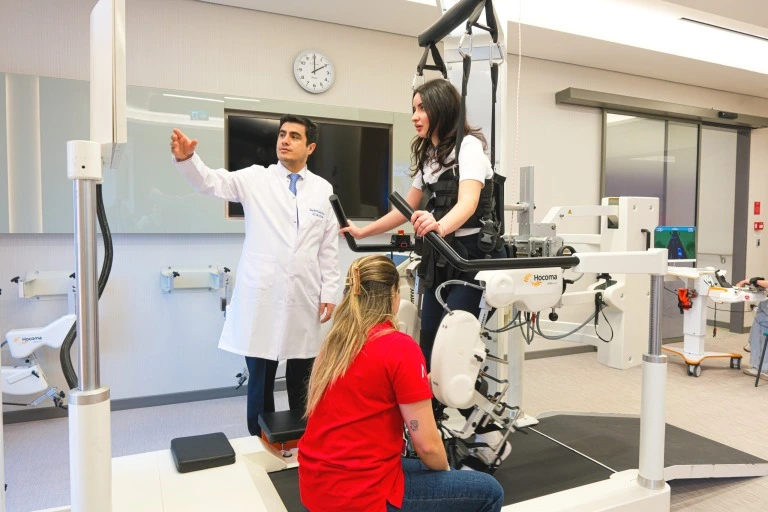
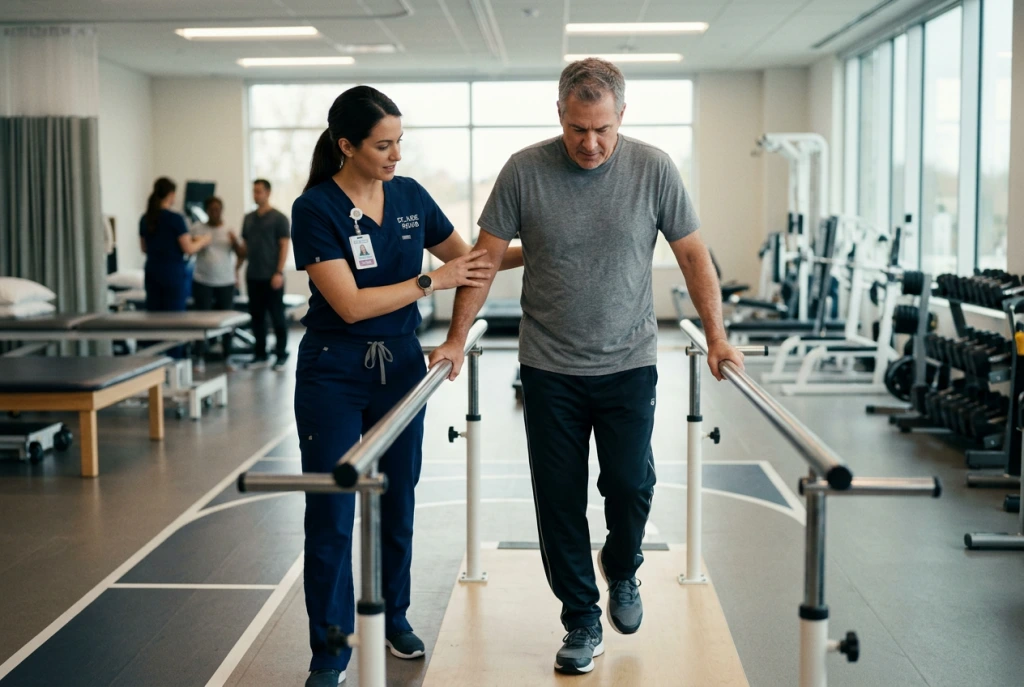
Depending on the patient’s needs, rehabilitation may include conventional gait training, body-weight-supported training, and robot-assisted gait rehabilitation.
Balance and Coordination Problems
Patients may experience difficulty:
- Standing independently,
- Changing direction,
- Shifting weight,
- Maintaining balance,
- Walking safely.
Balance training and individualized exercise programs may be incorporated into rehabilitation.
Spasticity
Spasticity is an abnormal increase in muscle tone that may develop after stroke.
It can cause muscle stiffness, involuntary contractions, restricted movement, pain, and functional limitations.
Spasticity may particularly affect the arm, hand, leg, and foot.
Treatment may include:
- Physical therapy and rehabilitation,
- Stretching and positioning,
- Functional exercises,
- Orthoses when appropriate,
- Medications,
- Botulinum toxin injections in selected patients.
The goal is not simply to reduce muscle tone but to improve movement, positioning, comfort, and function.
Speech and Communication Disorders
Stroke can affect speech and language abilities.
Patients may experience:
- Difficulty finding words,
- Difficulty understanding language,
- Slurred speech,
- Reduced ability to communicate.
Speech and language therapy may be an important component of rehabilitation.
Swallowing Problems
Some patients develop dysphagia, or difficulty swallowing, after stroke.
Swallowing impairment may affect nutrition and can increase the risk of aspiration and respiratory complications.
Early swallowing assessment and appropriate rehabilitation are therefore important.
Loss of Independence in Daily Activities
Stroke may affect everyday activities such as:
- Dressing,
- Eating,
- Personal care,
- Using the toilet,
- Walking around the home,
- Using stairs.
A major goal of rehabilitation is to help patients perform these activities as independently and safely as possible.
The Importance of Rehabilitation After Stroke
Rehabilitation is an essential component of stroke treatment.
When medically appropriate, early and individualized rehabilitation may support:
- Recovery of motor function,
- Improved balance and coordination,
- Better walking ability,
- Improved arm and hand function,
- Greater independence,
- Participation in daily and social life,
- Improved quality of life.
Modern rehabilitation approaches, including robotic rehabilitation when appropriate, may be incorporated according to the patient’s functional needs.
How Is Stroke Treated?
Stroke treatment depends on:
- The type of stroke,
- The area of the brain affected,
- Time since symptom onset,
- Severity of neurological impairment,
- The patient’s overall medical condition.
Treatment consists of both acute medical management and post-stroke rehabilitation.
The main objectives are to limit brain injury, prevent complications, and help the patient achieve the highest possible level of functional independence.
Acute Stroke Treatment
Anyone with suspected stroke symptoms should receive urgent medical evaluation.
During the acute phase, imaging and clinical assessment are used to determine the type and location of stroke.
For selected patients with ischemic stroke, acute treatments may include intravenous thrombolytic therapy or mechanical thrombectomy.
In hemorrhagic stroke, treatment may involve management of bleeding, blood pressure, intracranial pressure, and neurosurgical intervention when necessary.
Early Rehabilitation
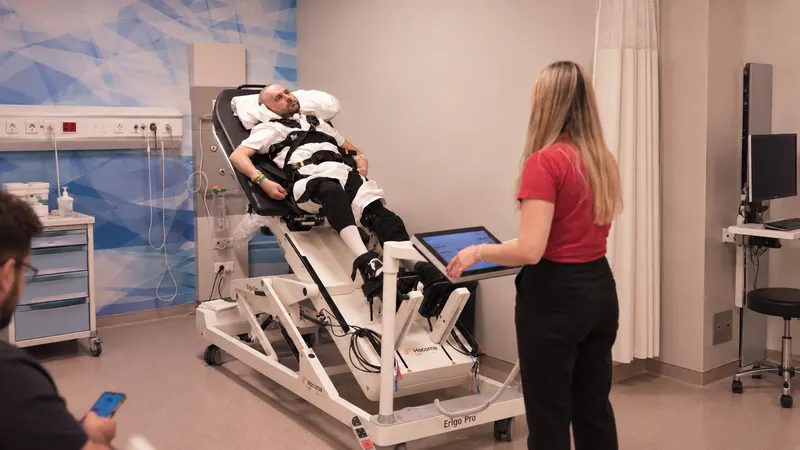
Rehabilitation may begin during the acute phase once the patient is medically stable and treatment is clinically appropriate.
Early rehabilitation may include:
- Positioning,
- Maintaining joint range of motion,
- Bed mobility,
- Sitting and trunk control,
- Gradual mobilization,
- Early balance training,
- Activities of daily living.
Treatment intensity should always be adapted to the patient’s clinical status and tolerance.
Long-Term Rehabilitation
Recovery after stroke may continue for weeks, months, or longer.
Long-term rehabilitation may include:
- Gait training,
- Balance and coordination exercises,
- Arm and hand rehabilitation,
- Spasticity management,
- Functional exercise programs,
- Robotic rehabilitation,
- Occupational therapy,
- Speech and language therapy,
- Swallowing rehabilitation,
- Cognitive rehabilitation.
The goal is to support greater independence and participation in everyday and social life.
Individualized Stroke Treatment
Every stroke patient has a different clinical presentation.
For this reason, treatment and rehabilitation should be individualized.
Assessment may include:
- Muscle strength,
- Motor control,
- Balance,
- Walking ability,
- Arm and hand function,
- Spasticity,
- Communication,
- Swallowing,
- Cognition,
- Activities of daily living,
- Personal rehabilitation goals.
The treatment program is updated according to the patient’s progress and changing needs.
Why Is Stroke Rehabilitation Important?
Motor impairment, weakness, balance problems, and limitations in daily activities can have a major impact on quality of life after stroke.
Rehabilitation aims not only to recover lost movement but also to improve independence, participation, and quality of life.
Restoring Motor Function
Individualized rehabilitation and regular functional exercises may help support recovery of movement after stroke.
Treatment focuses not only on muscle strength but also on motor control and the ability to use movement effectively during everyday activities.
Increasing Independence
Activities such as eating, dressing, personal care, transfers, and walking may be affected after stroke.
Rehabilitation aims to help patients perform these activities as independently as possible.
Preventing Secondary Complications
Reduced mobility can contribute to secondary problems such as:
- Joint stiffness,
- Contractures,
- Muscle weakness,
- Reduced cardiovascular capacity,
- Pressure injuries,
- Increased risk of falls.
Appropriate rehabilitation and positioning can help reduce these risks.
Supporting Quality of Life
Stroke rehabilitation aims to improve not only physical function but also participation in family, social, and community life.
The overall goal is to help each patient make the best possible use of their functional potential.
Robotic Rehabilitation After Stroke
Robotic rehabilitation technologies can be incorporated into comprehensive stroke rehabilitation for appropriately selected patients.
These systems allow controlled, repetitive, and measurable movement training.
They may be particularly useful for patients with:
- Walking difficulties,
- Balance problems,
- Arm and hand impairments,
- Reduced motor control.
Why Is Robotic Rehabilitation Used?
Stroke can disrupt the brain networks responsible for movement planning and control.
Repeated, goal-directed practice is an important principle of neurological rehabilitation.
Robotic systems can help patients perform a high number of controlled repetitions, supporting motor learning and neuroplasticity.
Robotic rehabilitation does not replace conventional therapy and does not guarantee recovery. It is one component of a comprehensive rehabilitation program.
Robot-Assisted Gait Training After Stroke
Walking impairment is one of the most common functional problems after stroke.
Robot-assisted gait systems can provide repetitive and controlled walking practice with adjustable levels of assistance.
Treatment goals may include:
- Improving gait quality,
- Supporting step symmetry and rhythm,
- Improving balance,
- Supporting muscle activation,
- Improving endurance,
- Increasing functional walking capacity.
Robotic Arm and Hand Rehabilitation After Stroke
Upper limb impairment is also common after stroke.
Patients may experience difficulty with:
- Reaching,
- Grasping,
- Releasing objects,
- Fine motor activities,
- Functional use of the hand.
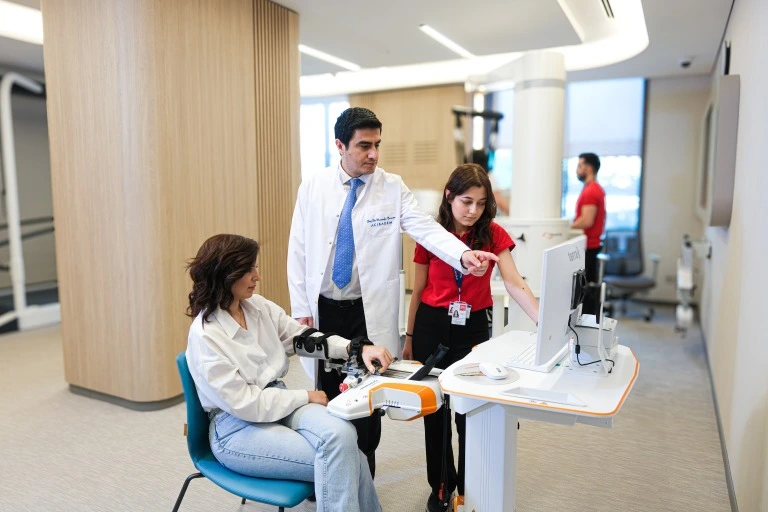
Robotic arm and hand rehabilitation may provide repetitive task-oriented practice to support upper limb function and participation in daily activities.
Advantages of Robotic Rehabilitation
Depending on the system used, potential advantages include:
- High-repetition training,
- Objective performance monitoring,
- Adjustable assistance,
- A controlled rehabilitation environment,
- Encouragement of active participation,
- Interactive feedback,
- Measurable progress tracking.
These data can help clinicians adjust treatment according to the patient’s progress.
Individualized Robotic Rehabilitation
Robotic rehabilitation is not applied in the same way to every patient.
The type of stroke, severity of impairment, functional capacity, medical condition, cognition, and rehabilitation goals should all be considered.
Robotic technologies are therefore used as part of an individualized and comprehensive stroke rehabilitation program.
Spasticity Treatment After Stroke
Spasticity may develop after damage to brain pathways involved in movement control.
Muscle stiffness and involuntary contractions may interfere with:
- Walking,
- Hand use,
- Dressing,
- Personal care,
- Positioning,
- Sleep,
- Daily activities.
What Are the Symptoms of Spasticity After Stroke?
Common findings may include:
- Muscle stiffness,
- Reduced range of motion,
- Involuntary contractions,
- Difficulty walking,
- Balance problems,
- Pain or discomfort,
- Abnormal positioning of the hand or foot.
How Is Spasticity Treated After Stroke?
Treatment is planned according to the severity of spasticity and its effect on function.
Options may include:
- Physical therapy and rehabilitation,
- Stretching,
- Positioning,
- Functional exercises,
- Gait training,
- Orthoses,
- Medications,
- Botulinum toxin injections in appropriately selected patients.
The objective is to improve movement, comfort, positioning, care, and functional ability.
The Importance of Early Spasticity Management
If spasticity interferes with movement and positioning over time, it may contribute to joint stiffness, contractures, pain, and reduced function.
Early assessment and regular follow-up can therefore help guide appropriate management and reduce secondary complications.
Returning to Daily Life After Stroke
Stroke may affect not only movement but also independence in everyday life.
Patients may have difficulty with:
- Eating,
- Dressing,
- Personal care,
- Household mobility,
- Social activities,
- Returning to work or previous roles.
Rehabilitation aims to help each patient achieve the highest possible degree of independence.
Regaining Activities of Daily Living
Stroke rehabilitation focuses on transferring improvements achieved during therapy into meaningful daily activities.
Treatment may address:
- Mobility,
- Balance,
- Transfers,
- Arm and hand function,
- Dressing,
- Eating,
- Personal care.
Occupational therapy can play an important role in this process.
Supporting Social Participation
Stroke may also affect social participation and confidence.
Rehabilitation aims to support patients in returning to family life, social activities, and community participation whenever possible.
Increasing Independence
One of the main goals of rehabilitation is to help patients perform everyday activities as independently and safely as possible.
Progress varies between individuals, so rehabilitation goals should be personalized and reassessed over time.
What Is a Stroke Center?
A stroke center is a specialized healthcare setting equipped to evaluate and treat patients with acute stroke.
Comprehensive stroke care may involve emergency medicine, neurology, neuroradiology, neurosurgery, intensive care, and rehabilitation services.
After the acute phase, patients who require ongoing rehabilitation may continue treatment in specialized neurorehabilitation settings.
What Should Be Considered When Choosing a Stroke Rehabilitation Center?
Important factors may include:
- Experience in stroke rehabilitation,
- A multidisciplinary team,
- Individualized rehabilitation planning,
- Access to appropriate rehabilitation technologies,
- Spasticity management,
- Speech and swallowing rehabilitation,
- Cognitive rehabilitation,
- Regular medical and functional reassessment,
- Access to hospital-based medical support when required.
The Importance of a Comprehensive Approach to Stroke Rehabilitation
Stroke rehabilitation requires more than treating a single impairment.
Motor loss, gait disorders, balance problems, upper limb dysfunction, spasticity, communication difficulties, swallowing problems, cognitive changes, and activities of daily living should be evaluated together.
A comprehensive program should therefore be individualized according to the patient’s neurological and functional needs.
Why Assoc. Prof. Dr. Mustafa Çorum?
Stroke rehabilitation is a comprehensive process aimed not only at recovering movement but also at helping patients regain independence and participate more actively in daily and social life.
Assoc. Prof. Dr. Mustafa Çorum works in the fields of stroke rehabilitation, robotic rehabilitation, spasticity management, brain injury rehabilitation, and neurorehabilitation.
Each patient undergoes an individualized assessment, and the rehabilitation program is planned according to their clinical condition, functional abilities, and treatment goals.
Gait disorders, balance problems, arm and hand impairments, spasticity, and limitations in activities of daily living are evaluated comprehensively.
Depending on the patient’s needs, treatment may include robotic rehabilitation systems, functional exercise programs, and other evidence-based rehabilitation approaches.
The goal is to improve functional capacity, support independence, enhance quality of life, and facilitate greater participation in everyday and social activities.
Frequently Asked Questions About Stroke
What is a stroke?
A stroke is a neurological emergency caused by interruption of blood flow to part of the brain or bleeding within the brain. Immediate medical evaluation and treatment are essential.
What are the symptoms of stroke?
Common warning signs include facial drooping, sudden weakness or numbness in an arm or leg, speech difficulties, balance problems, visual changes, and sudden changes in consciousness.
When should rehabilitation begin after a stroke?
Rehabilitation may begin as early as clinically appropriate once the patient’s medical condition allows. Timing and intensity should be individualized.
How long does stroke rehabilitation take?
There is no standard duration. Rehabilitation length varies according to stroke severity, functional impairment, age, overall health, individual goals, and progress.
Can patients who cannot walk after a stroke walk again?
Walking potential varies between patients. Appropriate gait rehabilitation may help some patients achieve significant improvements, while outcomes depend on the severity and location of the stroke and other clinical factors.
Is robotic rehabilitation used after stroke?
Yes. In appropriately selected patients, robotic rehabilitation may be incorporated into comprehensive treatment, particularly for gait and upper limb rehabilitation.
What is spasticity?
Spasticity is an abnormal increase in muscle tone that may occur after stroke and can cause stiffness, involuntary muscle activity, and difficulty with movement.
Can spasticity after stroke be treated?
Spasticity can often be managed using a combination of rehabilitation, stretching, positioning, medications, orthoses, and botulinum toxin injections when appropriate.
Can stroke rehabilitation support a return to daily life?
Yes. One of the main goals of rehabilitation is to improve independence in daily activities and support participation in family and social life.
Is a medical evaluation necessary before stroke rehabilitation?
Yes. A detailed medical, neurological, and functional assessment is necessary to develop a safe and individualized rehabilitation program.
Conclusion
Stroke is a serious neurological emergency requiring rapid diagnosis and appropriate medical treatment.
After the acute phase, patients may experience motor impairments, gait disorders, balance problems, spasticity, communication difficulties, swallowing problems, cognitive changes, and limitations in activities of daily living.
Modern stroke rehabilitation may include physiotherapy, robot-assisted gait training, robotic arm and hand rehabilitation, occupational therapy, speech and swallowing therapy, cognitive rehabilitation, spasticity management, and individualized functional training.
The rehabilitation program should be planned according to each patient’s clinical condition, functional abilities, and personal goals.
The overall objective is to support functional recovery, increase independence, reduce secondary complications, and improve quality of life.